


What Are Standard and Non-Standard Alternate Minimums?
Instrument flying can take significantly more pre-flight planning than easier VFR days where you just show up and go. Not only do you need to plan any applicable departure and or arrival procedures, as well as the approach into your designation airport, you also need...
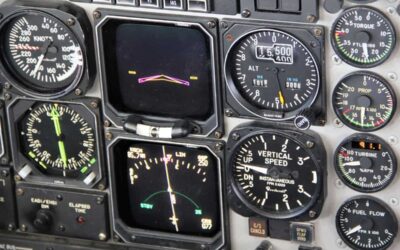
Why (and How Much) Temperature Affects Altimeter Readings
How well do you know the inner workings of your altimeter? Most of us understand that it uses pressure differentials to calculate altitude above sea level, and it is common place to receive barometric pressure settings to calibrate your altimeter based on the...

Why Are Some Airplanes Called “Heavy”?
While flying into a Class Charlie airspace you’re on a four-mile final and ATC tells you “caution wake turbulence for heavy aircraft landing.” You know what to do since your instructor taught you proper wake turbulence avoidance techniques, but why are some airplanes...

This is Why Fuel Tanks are Located in Aircraft Wings
Whether you are a seasoned, new, or aspiring pilot, you likely have noticed that aircraft fuel tanks are commonly located in the wings instead of the main body or fuselage of aircraft. While high level consideration may attribute this to space concerns, there are...
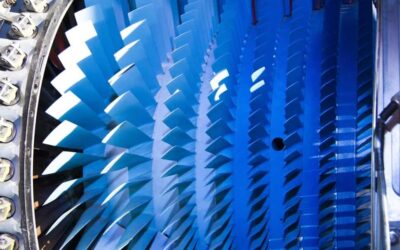
What are N1 and N2 in Aviation Turbine Engines?
Most pilots are roughly familiar with the power setting principals of piston engines, and even of the power setting principals of piston engines driving constant speed propellers. But for turbine engines, power is expressed in terms of “N1” and “N2.” Because...
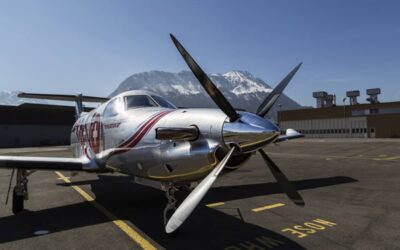
Turboprop vs. Turbofan: Safety, Efficiency, and Performance
Turboprop and turbofan engines appear to be radically different machines. How do the fundamental differences in each engine type affect the safety, efficiency and performance of these engines? The underlying fundamental differences lay not the mechanical...
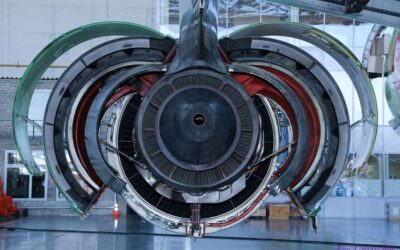
Turbojet vs. Turbofan: Safety, Efficiency, and Performance
Turbojets and turbofans are often discussed interchangeably in the aviation world, but are actually somewhat different types of engines. Both are “jet” engines and are in some ways indistinguishable from one another, but important fundamental differences exist...
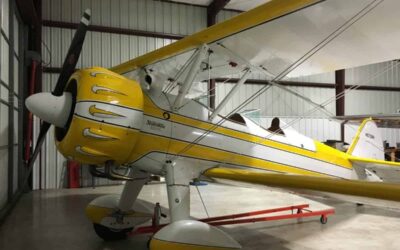
Biplanes vs. Monoplanes: 6 Factors Compared
Although most aircraft are made of the same basic elements, wings, rudder, elevators, a fuselage, and a tail cone, the way these elements are created and organized on the aircraft can be a little different and can create different flying characteristics. Anyone who...

Piston vs. Turboprop: Performance, Efficiency, and Safety
Piston and turboprop powered aircraft uniquely overlap in their flight regimes raising the inevitable question of which power plant is better. The two power sources can be compared in a range of categories, but this evaluation will focus on relative differences...
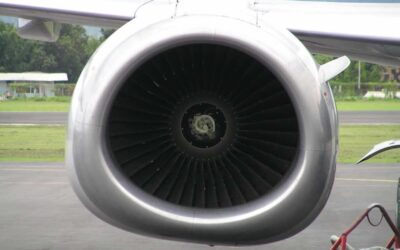
Why Are 737 Engines Flat on the Bottom?
Modern transport aircraft designers have settled on two primary layouts; engines slung beneath the wing and for smaller aircraft, engines mounted on the aft fuselage. The most ubiquitous of these wing mounted designs is 737, but it features a distinctive flat...

Available NOW! Airplane Academy Private Pilot Flashcards
It took over a year to build this premium set of 350+ private pilot study flashcards. They are perfect for student pilots preparing for a checkride and licensed pilots studying for a flight review! Learn more by clicking the link below.
Affiliate Disclaimer: This site is owned and operated by Airplane Academy LLC. AirplaneAcademy.com is a participant in the Amazon Services LLC Associates Program, an affiliate advertising program designed to provide a means for sites to earn advertising fees by advertising and linking to Amazon.com. This site also participates in other affiliate programs and is compensated for referring traffic and business to these companies.