

Becoming a pilot and owning your own plane is absolutely doable, but in order to get there, there are several key challenges you’re going to have to overcome, and understanding them upfront will help you know what to expect as you get started.
I also cover all of the material in this article in the video below. 👇
Level One: Being Willing to Suck at First
The first challenge you’ll likely need to overcome, at least this was the case for me, is being willing to be bad at something in the beginning.
As an adult, you’re typically used to doing things you’re already good at. You’ re likely in your career because you enjoy it and even if you don’t, you’ve probably developed skills in it over time, and that’s part of why you continue.
The same is true for hobbies. You tend to choose activities where you have some ability or ones where you enjoy improving.
But learning to fly is going to be completely opposite of that.
You’re going to get in the cockpit and quickly realize that you’re not very good at it. This can be an ego hit at first, and you may start to question whether you are cut out for it.
When you think back to learning something as a child, like soccer, you likely didn’t realize how bad you were at the beginning, so quitting wasn’t really on your mind. You just kept going, and eventually, you reached a point where you could say, I am actually pretty good at this.
But as an adult, you’re going to have to make the conscious decision to keep going even though you suck. And I say that lovingly. You’re going to suck at first, but you’re going to get way, way better.
Two Things That Help
There are two things that can really help with this.
One is to literally write down and put on your bathroom mirror or somewhere you look often that says:
“I want to be a pilot so badly that I am willing to be bad at it in order to become good at it.”
And that has to be your mentality.
The other thing that’s going to really help create that mentality is using the word yet.
So, anytime you get in the cockpit and find yourself thinking, “I’m just not very good at landings.” add the word yet to the end of the sentence. The same applies to something like, “I don’t understand what is going on with air traffic control here.”—add yet.
This reframes the thought and reminds you that, like a young soccer player, if you stick with it, you’ll likely become good at it. You just need to stay with it long enough to improve.
Level Two: Life Is Going to Get in the Way
If you look through the comments on my videos, you’ll see many people that say things like, “I had momentum, and then the weather got bad, the airplane went in for maintenance, or my instructor left.”
There will be setbacks. In your personal life, things will get busy. Maintaining momentum can be challenging.
The Antidote: A Dedicated Sprint
Please please please hear me out here. Do a dedicated sprint.
On your private, on your instrument, whatever you’re working on. I have done it casually and it usually doesn’t work. The only way I’ve really had success is doing a dedicated sprint where you’re like:
“Okay, I’m carving out this season. I’m going to say no to most things in my life.”
Because the only way to make time for something is to not spend it on everything else.
And just say: “No, I am buckled down for a dedicated season to just knock this out.”
Because if you don’t, the chances of life getting in the way are a lot higher.
Two Small Ways to Sprint
- Never leave the flight school without booking your next flight.
- Set a timer for decisions in research mode.
If it’s reversable, like what ground school do I use to study, what headset do I buy, set a timer and say, “At the end of this timer, I am making the decision, I’m buying it, and I’m moving on.”
Because research mode can really just end up being procrastination because you’re scared to take the next step. So set a timer, make a decision, and keep going.
Level Three: Air Traffic Control Feels Like a Foreign Language
The third level you’re probably going to experience is difficulty with air traffic control. The first time my instructor told me to speak on the radio, it might as well have been Chinese.
The Reality
It is kind of a foreign language at first until you realize that about 90% of it is the same thing over and over and over.
It really just follows: Who you are, where you are, and what you want to do.
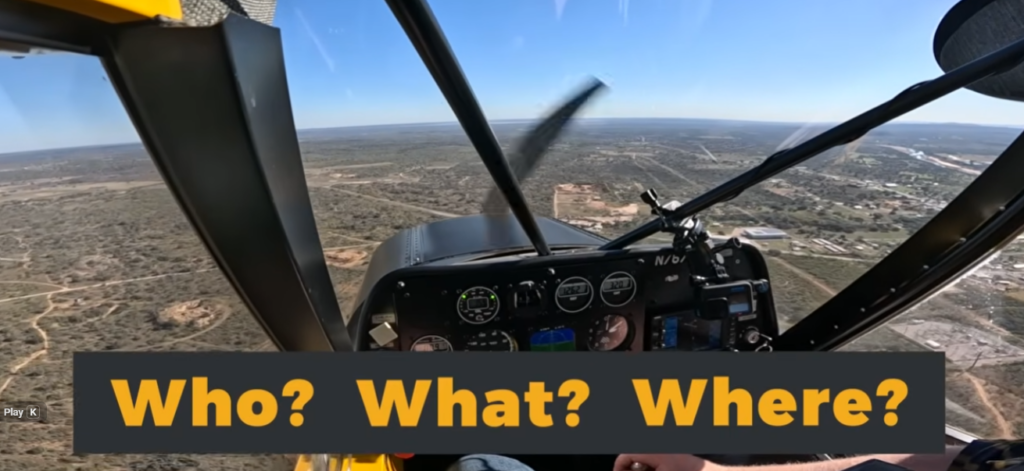
It’s not that much different than calling the plumber. Talking to air traffic control mirrors real life. And when you realize that, it can really help the cadence.
Use These Two Words
“Student pilot.”
The Aeronautical Information Manual actually suggests that student pilots say they’re student pilots:
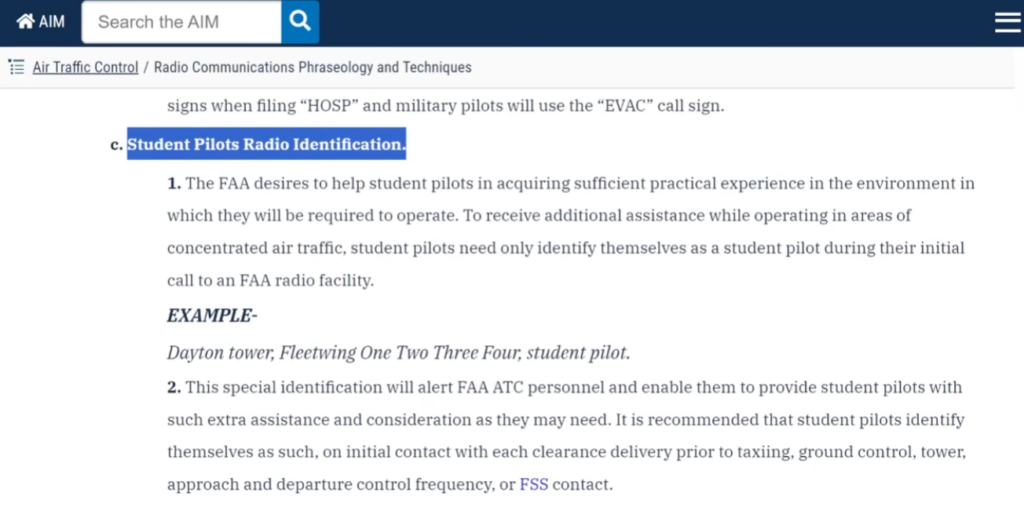
So you can just say your transmission and then add “student pilot” at the end. People will be more understanding. They’ll help you out. Everyone’s been there.
Check out my video below where I talk about 90% of what you’re going to experience in any given VFR flight.
Level Four: Early Overwhelm
The next level you’re going to have to conquer is early overwhelm. You’re going to get in the cockpit and think…
There are so many knobs and switches and buttons.
Checklists.
Air traffic control talking.
Trying to figure out how to fly.
What does the rudder do?
It’s a lot.
The Encouragement
I get emails all the time from new pilots saying “I’m 3 hours in and I don’t know if I can do this.” or “I was so excited and now I’m discouraged.”
I’ve been there.
Do you remember the first time you drove? You were probably completely freaked out. Now you can do it without thinking. Your brain is capable of incredible muscle memory.
And if you stick with it you’re going to figure out the order of things.
You’re not going to have to think about every tiny input. Eventually, you’re just going to start doing it. And you’re going to think, “Whoa, I just did it.”
I’ve never gotten emails from people saying, “I’m 100 hours in and I still feel that way.” Instead, I get emails that say:
“Hey, I just got my license.”
“I just bought my first plane.”
So stick with it.
Level Five: The Volume of Information
The sheer volume of information you need to memorize as a pilot can feel like a lot.
Reframe It as a Language
My favorite flight instructor told me, “Aviation is a new language and you just have to become fluent in it.”
It’s not about memorizing random facts. It’s about repetition and fluency. The big unlock here is active recall.
If you’re just reading notes over and over, that’s passive. You’re not really engaging your brain or forcing it to retrieve the information.
Instead:
- Try to answer before you check. When you look at a question or topic, pause and see if you can recall the answer on your own before looking it up.
- Pull information out of your brain. Even if you are unsure, make an attempt. That process of retrieving the information is what strengthens your memory.
- Then correct and reinforce. Check the correct answer, identify where you were right or off, and then go back over it so it sticks more effectively the next time.
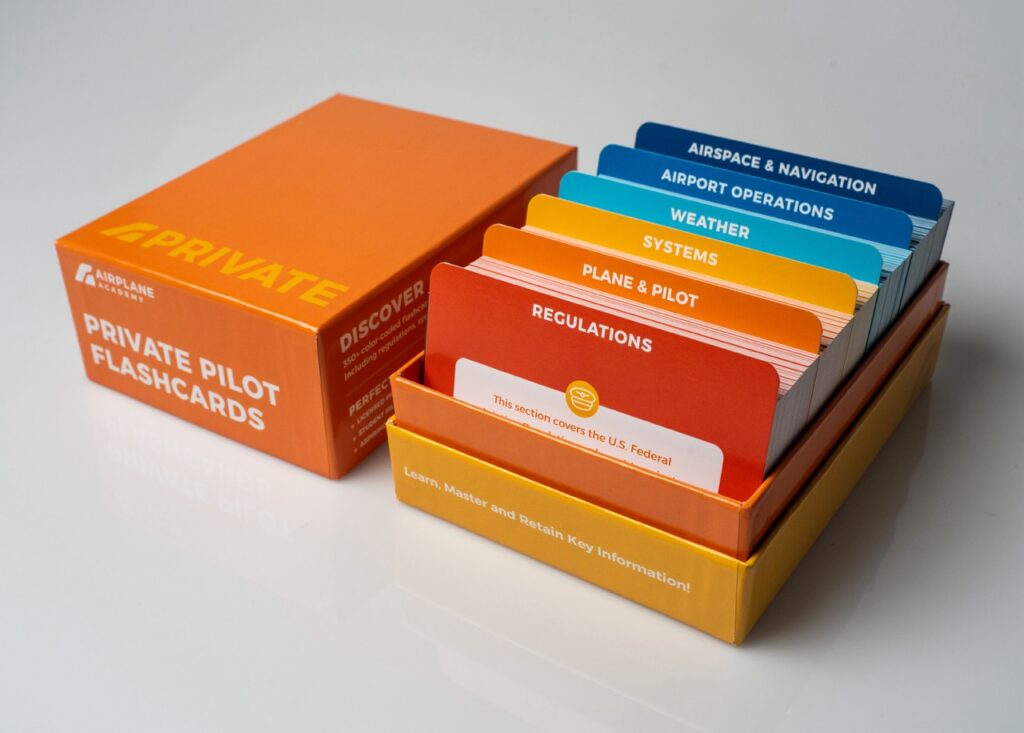
This is why flash cards are effective. You’re forcing your brain to work. And that makes memorization way more effective.
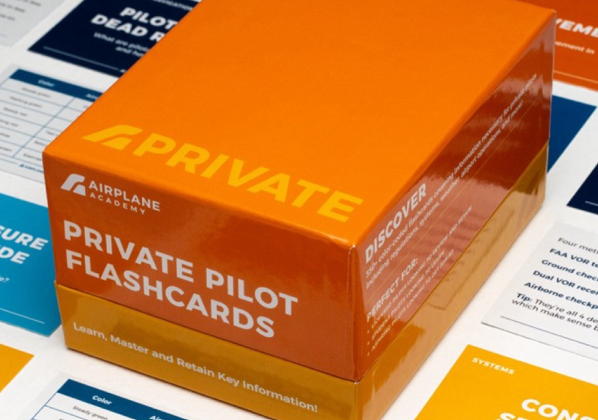
If you want a ready-made way to practice active recall, I recently launched my own study flashcards.
There are over 350 cards, they took me nearly a year and a half to make, they’re reviewed by flight instructors, and they have been used by thousands of pilots.
You can check them out at airplaneacademy.com/flashcards if you want to learn more.
Final Thought
These challenges are part of the process, not a sign that something is wrong. Every pilot has faced them in some form. If you stay consistent, keep moving forward, and give yourself time to develop the skills, you will get through them.