

I got to fly the 182 and Turbo 206 with Cessna for a few days. They are both incredible airplanes but have some big differences. We’ll look at the key features side by side so you can make the decision of what’s right for you.
And I didn’t expect this — but after flying both of them, my mind was changed!
I also cover all of the material in this article in the video below. 👇
General Layout
The 182 and 206 are pretty similar in their layout, although the 206 has the third row bench seat fit into it as well.
The 206 is the 182’s big brother and as such you’d think that it would also have a bigger hangar footprint, but surprisingly the 206 is actually 9 inches shorter than the 182 even though it’s got that third row.
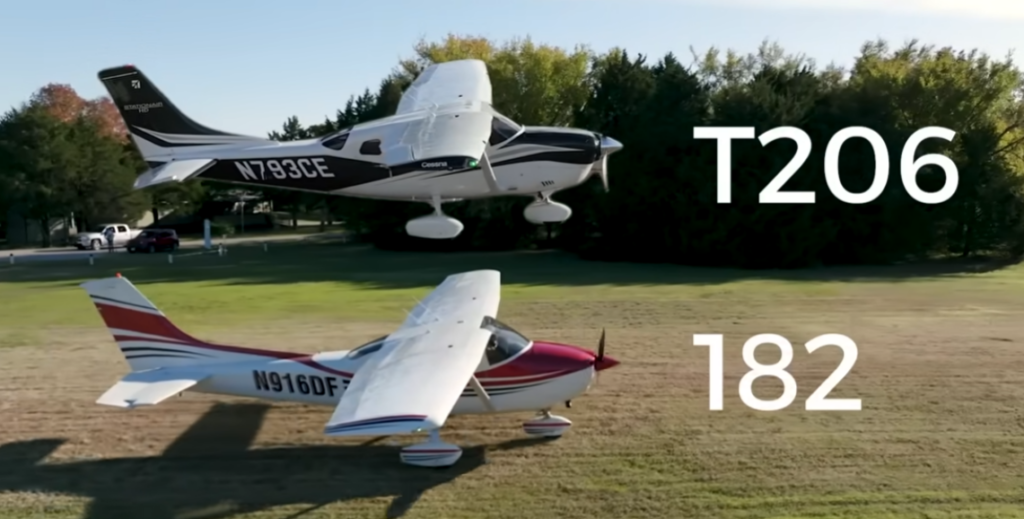
The new ones have the same height, same wingspan, and same wing area.
Useful Load
A big area that they are quite different is in their useful load.
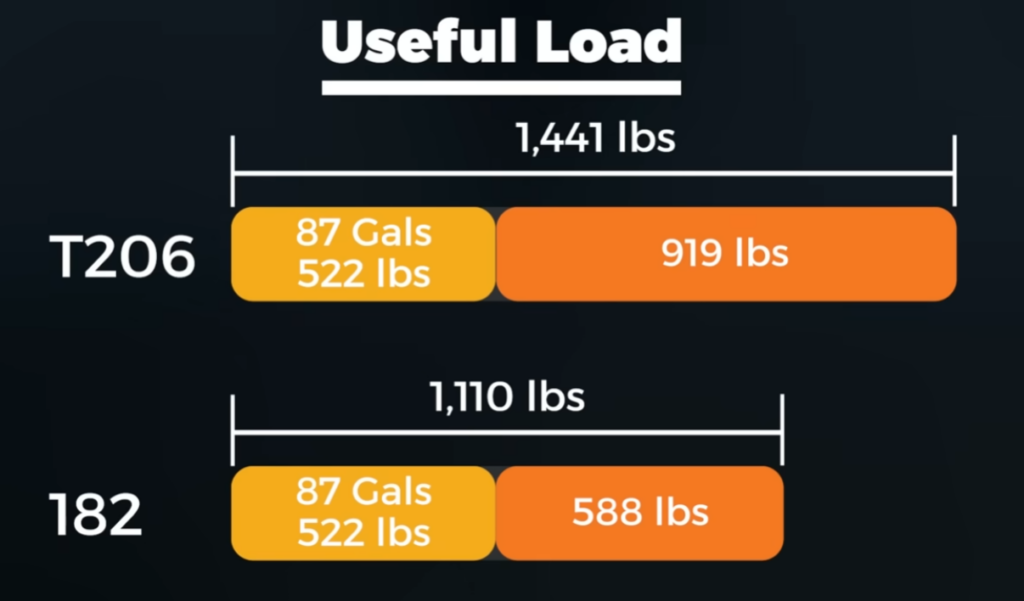
The 182 has 1,110 pounds of useful load and the Turbo 206 has 1,441 pounds.
Once you load both of these up with full fuel, which is 87 gallons in each of them, the 182 can carry 588 pounds and the Turbo 206 919 pounds.
That’s worth a bit of a disclaimer though because once we get into fuel burn you’ll see that you really don’t need to be flying the 182 with full fuel.
For instance, if you had ⅔ fuel (which is still over 3.5 hours of fuel), that useful load you get another 175 pounds back or so, putting that useful load up to like 760ish.
The point is, the 182 still carries a pretty decent amount.
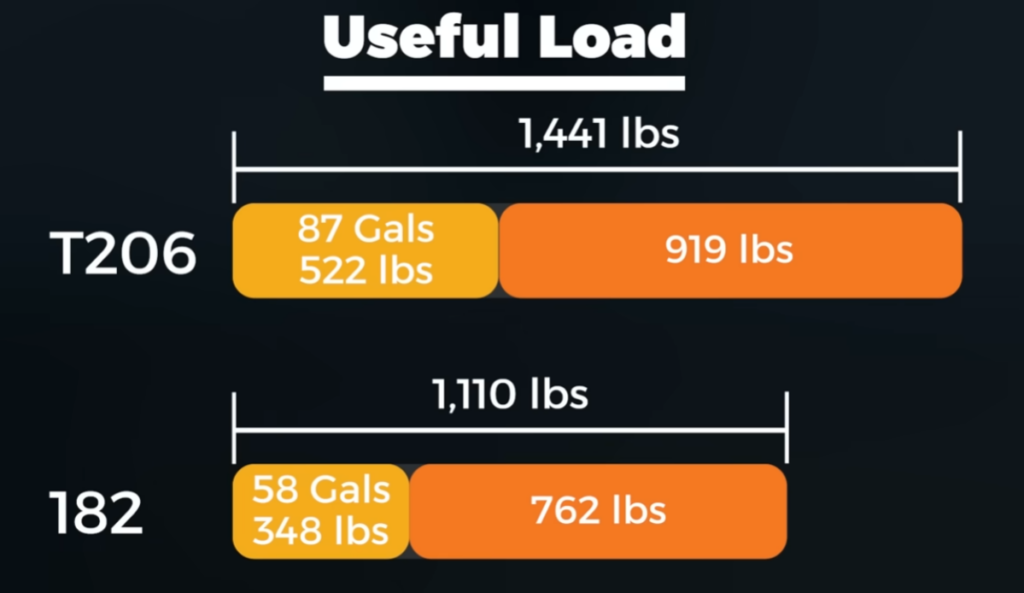
But the Turbo 206 with 900+ pounds of useful load on top of full fuel is just incredible. This is very realistically a full fuel, four people, and all their gear kind of airplane. It’s tremendous!
Speed
The 182 has a published max cruise speed of 145 knots, and the Turbo 206 is 161 knots.
One caveat on the turbo is that you’ll need to go higher up to experience that higher airspeed because that’s when the turbocharged engine really shines.
When I flew the Turbo 206 to Arkansas and also Colorado, at 14,500 feet we were getting about 158kts of true airspeed but up at 17,000 feet we did get that published 161 knots. Down low you’ll be a little slower than that.
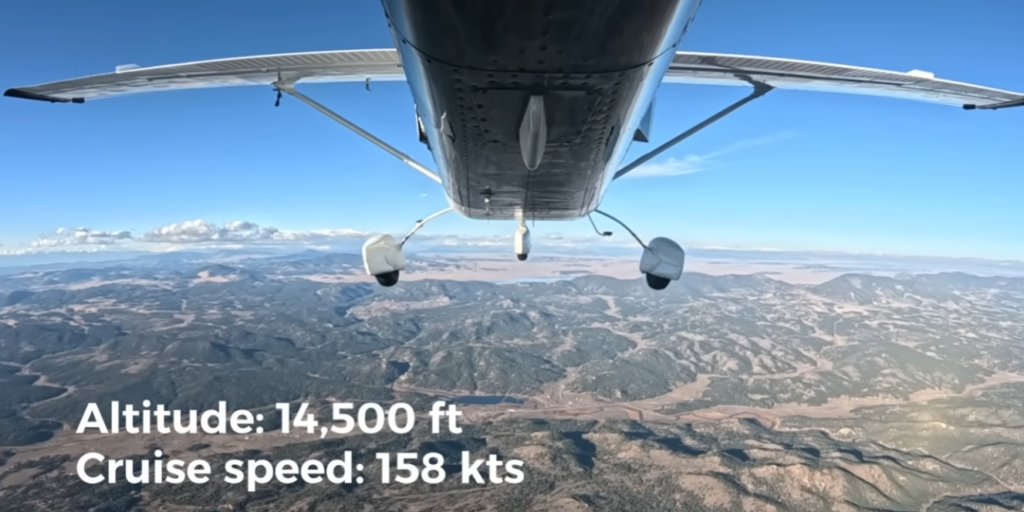
Any time you compare speed, you have to look at it from a practical perspective. Over the course of a 200nm trip, you’re talking a difference of about 8 minutes. Unless you are routinely needing to go far and fast, this is a fairly minor speed difference.
Engine / Fuel Burn
The 182 has a Lycoming IO 540 engine putting out 230 horsepower. The Turbo 206 is a Lycoming TIO 540 engine putting out 310 horsepower.
The 182 at cruise burns an advertised 15 gallons per hour but in reality you can get less than that. Like my 1975 182, I plan for 13gph and you can pull it back farther than that, too.
The Turbo 206 burns more like 20–20.5 gallons per hour.
Range
By the book, the 182 has a max range of 915nm, and the Turbo 206 is 703nm.
I’ve never operated an airplane in max range configuration, ever. So I think a more practical way to look at this is to think about an average flight.
If we fill in some assumptions for how far you’d travel in 3 hours, you’ll find that the average leg distance for each plane is fairly similar.
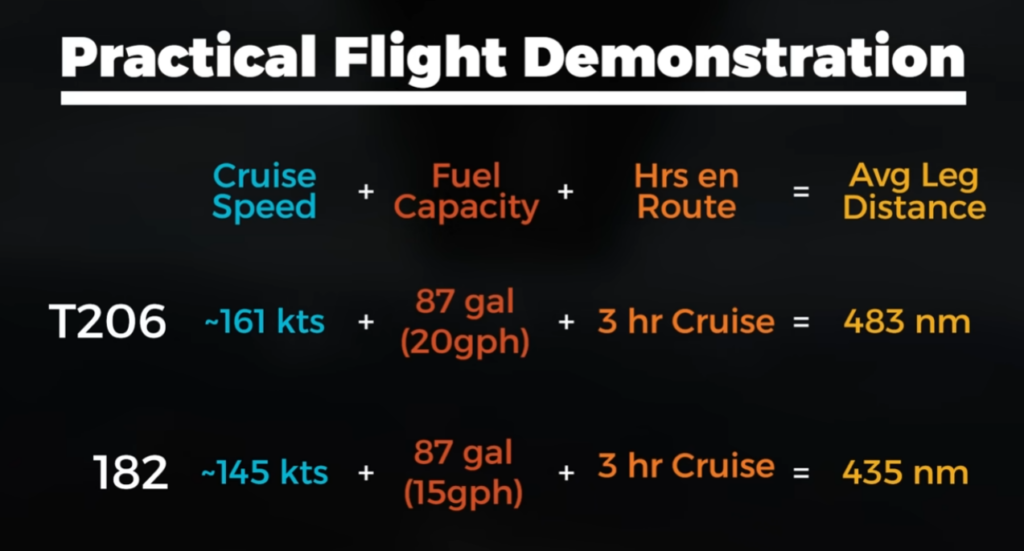
While the 182 technically has a couple hundred more nautical miles of range, on an average 3 hour cruise flight they are actually going to be fairly similar.
In my own 182 which holds 75 gallons, one of the nice things about having longer range is not that I’ll actually fly 5–6 hours at a time, but it does mean that you’re getting fuel a little less often because you might be able to make more than one flight on the same tank of fuel.
Climb Rate
As for climb rate, they both have impressive maximum climb rates. The normally aspirated 182 isn’t going to keep that climb rate as you go up because as with all non-turbo airplanes, you lose engine performance as you climb.
The Turbo 206 is in a different category here. When we flew in Colorado and took off from Colorado Springs to go to Aspen, we had full fuel, 3 people, and lots of camera gear. We were climbing through 8,500 feet and were comfortably getting 850fpm climb, going about 100 knots.
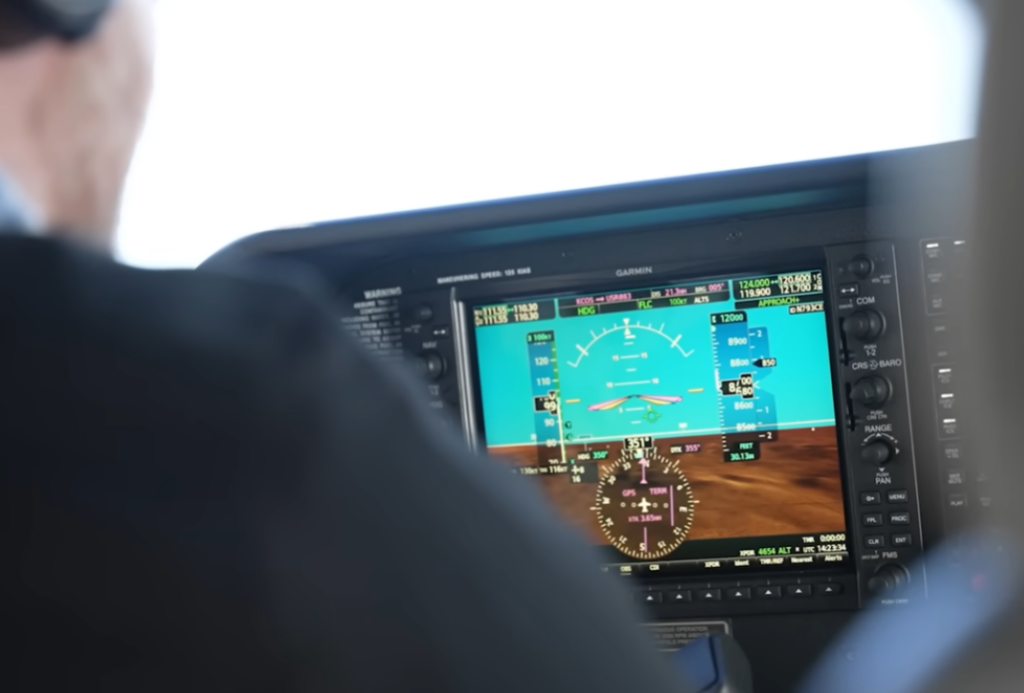
We could have been climbing steeper as well, as Vy is 87 knots. Later on, we were at 13,500 feet going about 95 knots still climbing at 850fpm.
The sustained climb rate is going to be much higher in the Turbo 206 and this is one of the main advantages of the turbocharged engine.
Cessna also currently makes the turbo 182 as well, so if flying high is important to your mission you can check that out. I’m just comparing the two airplanes that I actually flew with them.
Max Ceiling
Like most normally aspirated pistons, you’re probably going to be flying the 182 no higher than about 10–12,000 feet unless you’re carrying oxygen, but even if you are, the engine performance really degrades much higher than that.
The max ceiling is 18,100 feet in the 182 but realistically you’re never going to be going close to that.
On the other hand, the Turbo 206 has a max service ceiling of 26,000 feet and I actually could see you getting up there. We only ever got up to 17,000 feet because we just had nose cannulas and to go much higher you need an oxygen mask.

Flying around in the Rocky Mountains I could definitely see the use case to jump up into the high teens at least and go over stuff, whether that’s terrain or weather or chasing tailwinds. Having that extra optionality with the turbo can come in real handy depending on where you’re flying.
Takeoff and Landing Distance
The takeoff and landing distances by the book are pretty similar, though in real life you’ll usually get better performance than this since these numbers come from certification testing which are intentionally conservative.

On a practical level though, both airplanes are extremely versatile. You’ll see 182’s and 206’s in the middle of class B airspace, and you’ll see tons of them in the backcountry, too. I’ve taken my 182 to Idaho, Arkansas, and more, and it’s a great backcountry airplane. The 206 is no different.

Flying Experience
The 182 is just a bigger, slightly heavier, much better powered Cessna 172. It’s very responsive, well powered, and just overall easy to fly. It’s a little heavier on the controls than a 172 but honestly everything is heavier on the controls than a 172.
Maximum takeoff weight in a new 172 is 2,550 pounds, the 182 is 3,100 pounds, and the T206 is 3,789 pounds. So it’s a similar step up in weight from a 172 to a 182, and then from a 182 to a Turbo 206, going up by roughly 20% in weight on each.
If you can fly a 172 (and everyone can), it’s just a 20% bump up in weight to a 182, with about 30% more power. And to go into a 206, it’s about 20% bump in weight, with about 35% more power, so it’s pretty linear.
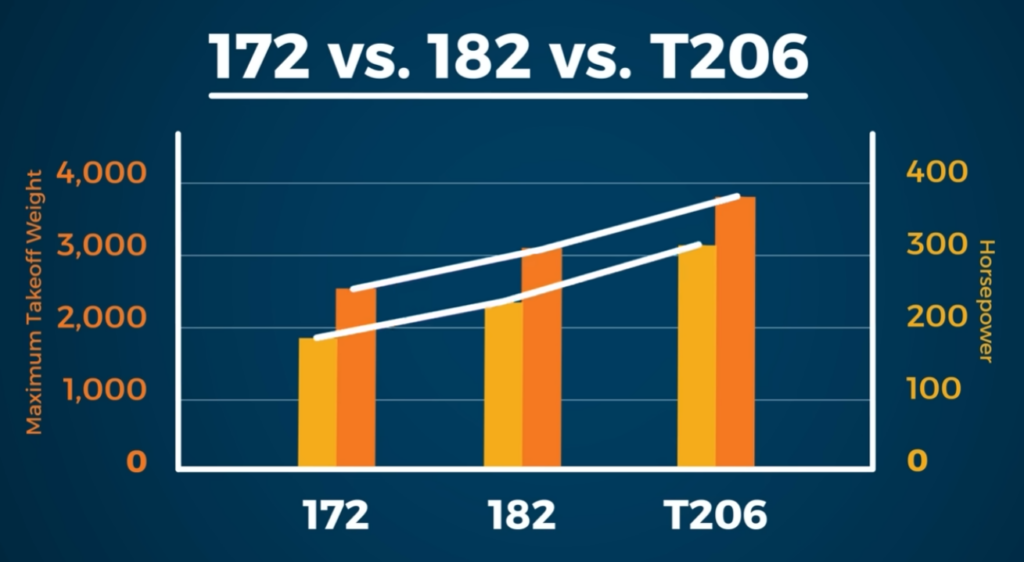
But they are all responsive and all extremely easy to fly. They have very forgiving flight characteristics and land slow as well. There’s a reason they’ve been making these for decades with so much success. They are great to fly!
Interior
Once we get inside, the cabin dimensions are pretty similar as well. The Turbo 206 is one inch taller and one inch wider than the 182.
The biggest thing you’ll notice is that there are 4 seats in the 182 and 6 in the Turbo 206, and along with that, you get these huge double doors in the back of the Turbo 206. You access the third row and cargo area through those doors.


The aft bench seat is not as roomy as the other four seats but kids and small adults would be fine back there. It’s great because you can lay the seat flat for extra baggage room or easily take the entire bench seat out which creates a massive area for cargo.
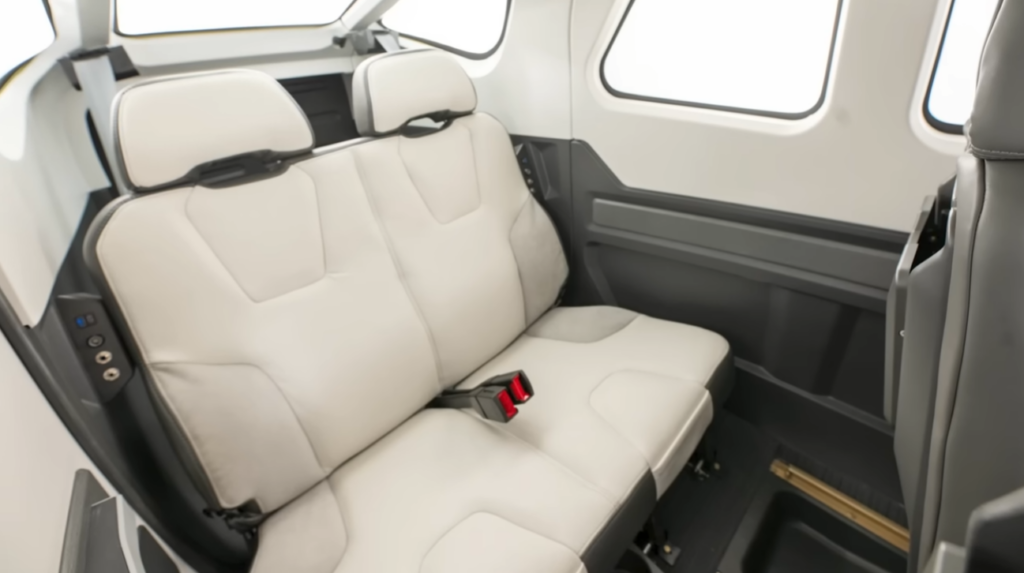

This combined with the large useful load is one of the very best features of the Turbo 206.
In exchange for the double doors, you do lose the copilot’s door and so all four front seats are accessed through the pilot’s door, but I think it’s a worthwhile tradeoff.
Avionics
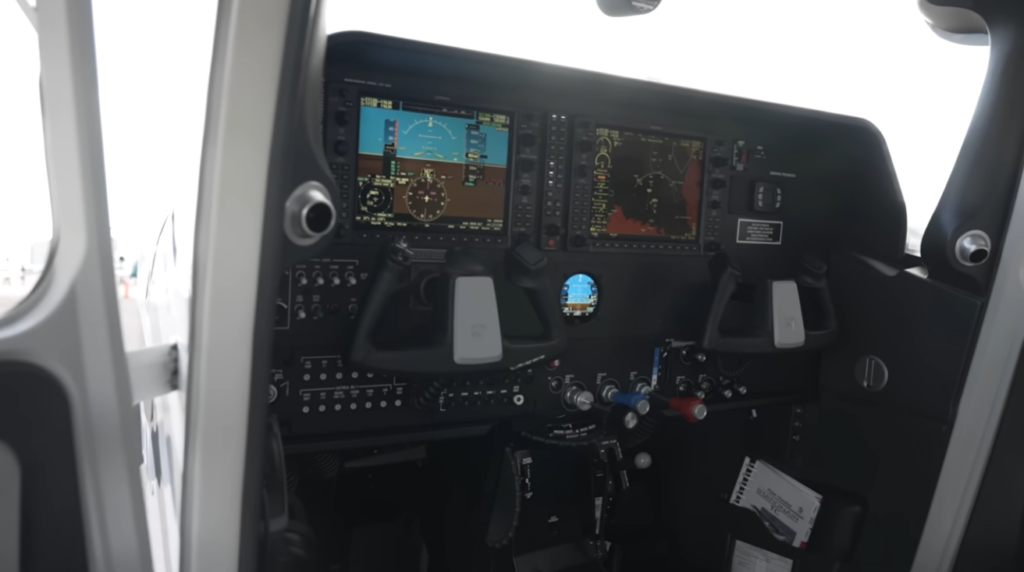
Both airplanes are equipped with the same avionics in the G1000 NXi, and the electronic standby in the Garmin GI275. You can also get the Garmin GFC 700 autopilot, which is awesome.

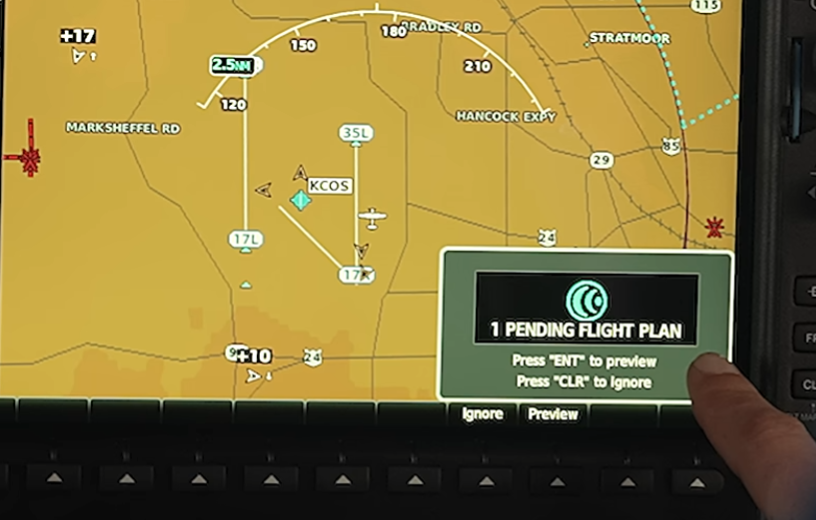
You get the Flightstream 510 as well which allows you to sync your iPad to the panel and make flight planning and route uploading so much easier.
They come with electronic stability and protection, or ESP, which can automatically engage the autopilot at straight and level when it senses you might be disoriented and over-banked. These new ones are incredibly sophisticated.
The Turbo 206 also comes with integrated oxygen on board and you have ports at all six seats.
Ownership Costs
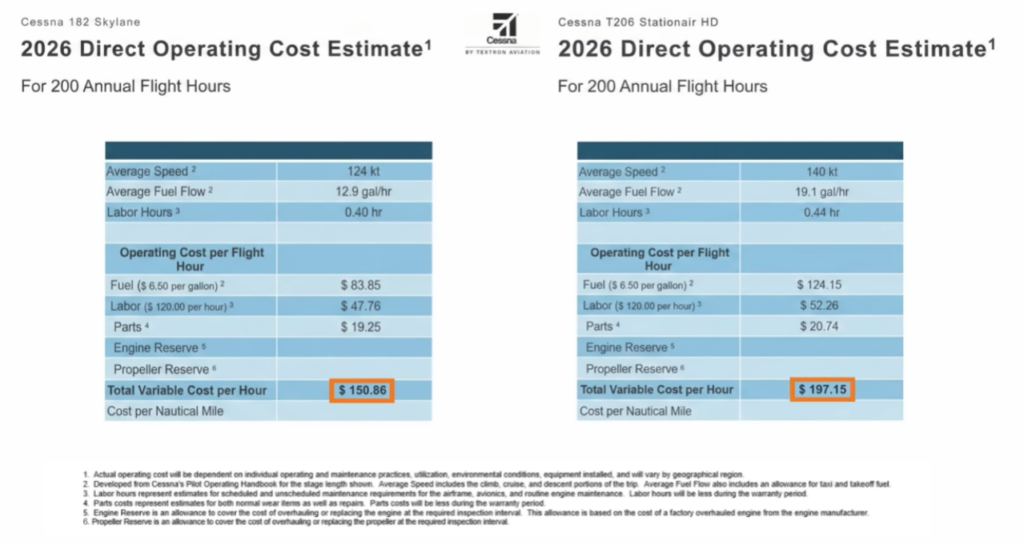
In terms of operating costs, this will depend on your own situation in terms of hangar, insurance, financing, etc. But, just on a pure variable cost level, Cessna actually worked up some estimates on the new 182 and new Turbo 206.
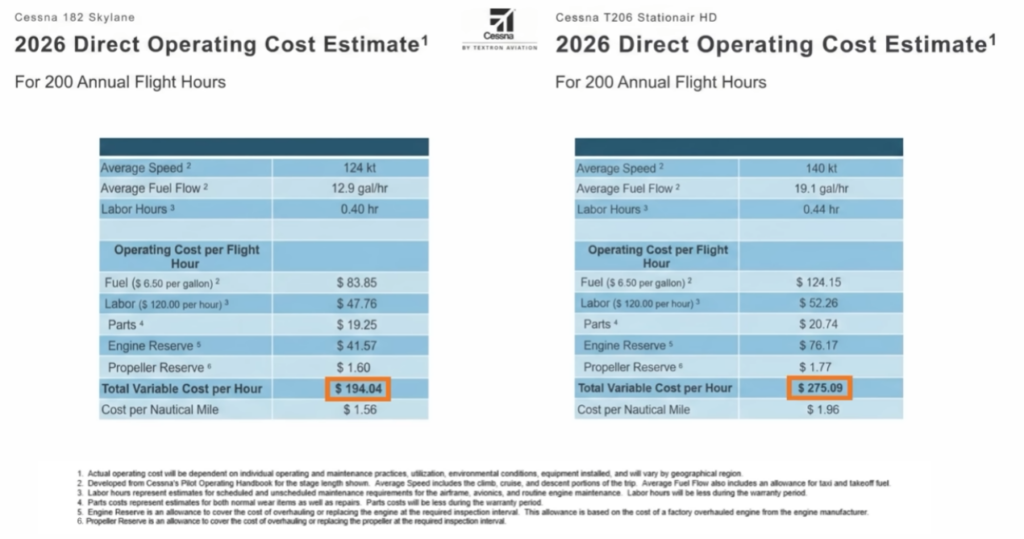
It came out to about $194 per hour for the 182 and $275 per hour for the Turbo 206 for 200 flight hours per year.
For 100 flight hours per year, it’s roughly $20 more per flight hour, about $214/hr for the 182 and $295/hr for the T206.
The overhaul reserves aren’t actually cash expenses every time you fly, but they are good to keep in mind. But if you remove those just to look at actual cash expense here and now, it’s about $150/hr for the 182 and $197/hr for the T206 for variable costs at 200 hours per year.
For 100 hours per year, without the overhaul reserves it’s about $171/hr for the 182 and $207/hr for the T206.
I’ve had my 1975 Cessna 182 for 10 years now and I LOVE it. It’s an affordable option in the scheme of aviation although it doesn’t have all of the latest and greatest features, particularly on the avionics. But, I’m considering a panel upgrade in that, too, to bring it up to today’s technology.
So you don’t HAVE to buy a NEW aircraft to still experience the awesomeness of the 182 or 206. If you can afford a new one and want to do that, I’m all for it. But if that’s out of reach, the older models are still awesome.
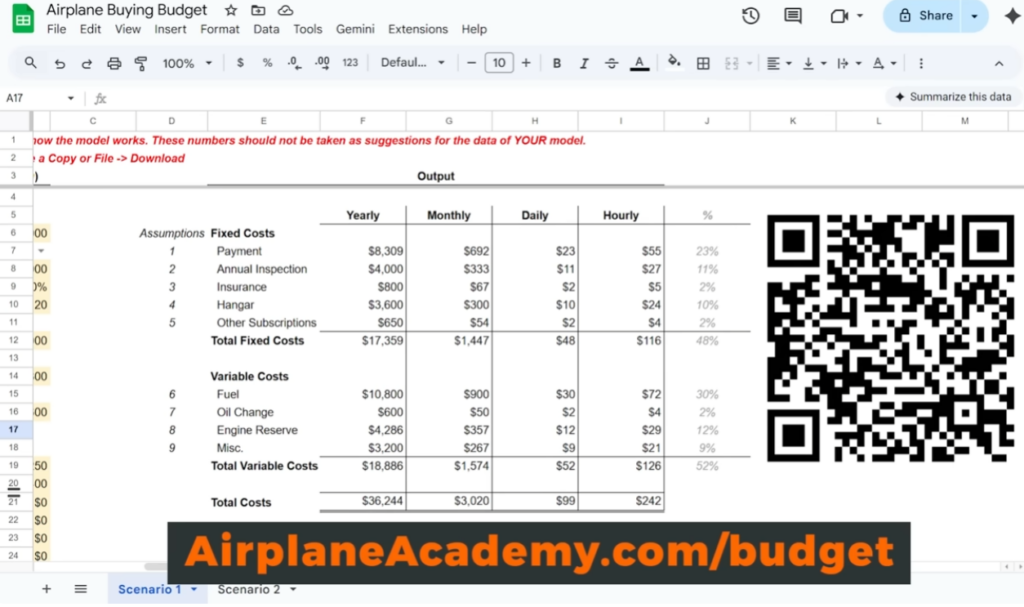
There are a lot of moving pieces here and so if you want to play around with your own numbers, I do have an airplane budgeting spreadsheet that helps you look at all of the fixed and variable costs and see how much that would be per flight hour, per month, per year, etc. It’s totally free and you can grab that over at airplaneacademy.com/budget.
My Changed Perspective
I’ve owned my 182 for 10 years, and I still believe it’s one of the best all-around airplanes ever made. It’s good at a little bit of everything. I still stand by that.
I used to think the 206 was overkill unless you were always hauling a ton or doing rugged backcountry work.
In my head, it was the airplane parked at Sulphur Creek in Idaho, bringing in groceries once a week. Incredible airplane, just not my mission.
What surprised me after flying the 206 for several days wasn’t just the useful load. That part is real and it’s impressive, but that’s not what changed my mind.
What got me was the performance margin.
The climb, the high-altitude capability, the feeling that the airplane just had extra in reserve, I didn’t fully appreciate how good that would feel and how I would desire that even when flying solo.
I always told myself I’d only want a 206 if I had a huge family or was maxing it out all the time. But after this trip to Colorado, I came home and told my wife, “Yeah… I want one.”
Even if you only need that full useful load 10% of the time, it’s the extra capability you get the other 90% that makes the 206 so compelling. If it’s in your budget, I genuinely think it’s worth it.

And if that still feels like overkill, the 182 is one of the best decisions you’ll ever make. It’s why I’ve owned mine for a decade and still love it.
That old mental image I had of the 206 as just a backcountry hauler is still there, but now it’s only part of the story. After flying it into Aspen, I see the 206 as a true luxury utility aircraft, something that can carry a lot, go just about anywhere, and do it with real margin.
That flight is one of the coolest in my logbook, and we filmed the whole thing. Check it out below, it will give you a real sense for what the new Turbo 206 is like!