
I’ve had my pilot’s license for 18 years, and I’ve owned my own airplane for the last 9 of those years. In this post, I’m going to break down step by step how you can get your private pilot’s license.
I also cover all of the material in this article in the video below. 👇
From a high level, there are three main steps:
- Ground School
- Flight Training
- Final Check Ride
#1) Ground School
Ground school really just means all of the required book knowledge that you have to learn.
A lot of this is going to be net new information.
You’ve probably never studied weather theory, airspace, regulations, or theories of lift before. It can be really intimidating, but try not to get overwhelmed.
The main challenge in this is not the quality of the information, but it’s the quantity.
No one topic is all that hard to comprehend.
Some things are harder than others. Most of it’s pretty understandable. It’s really just the volume that gets people.
How to Complete Ground School
You can either do ground school in person or online.
In person, you can meet one-on-one with an instructor who will teach you everything. Some flight schools offer an intensive 3-day ground school or a weekly class that meets one night a week for about eight weeks, where you are working through the material in a more concentrated format.
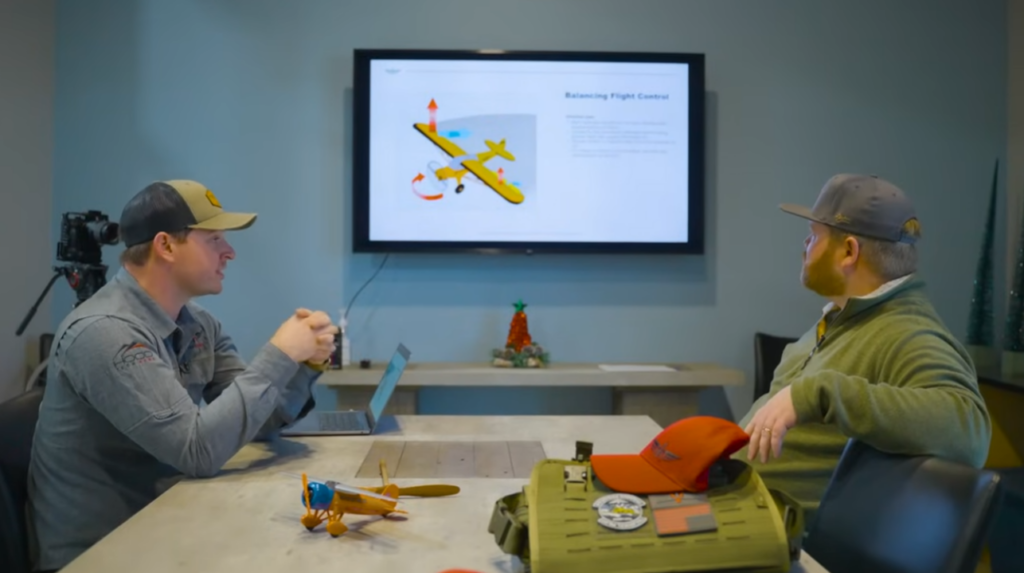
The other way to do it is online, and this is probably becoming the most popular option now because it is the easiest and most accessible. There are many different online ground school providers, and it’s usually a series of videos to watch along with quizzes and tests, essentially an online course.
Logbooks and Endorsements
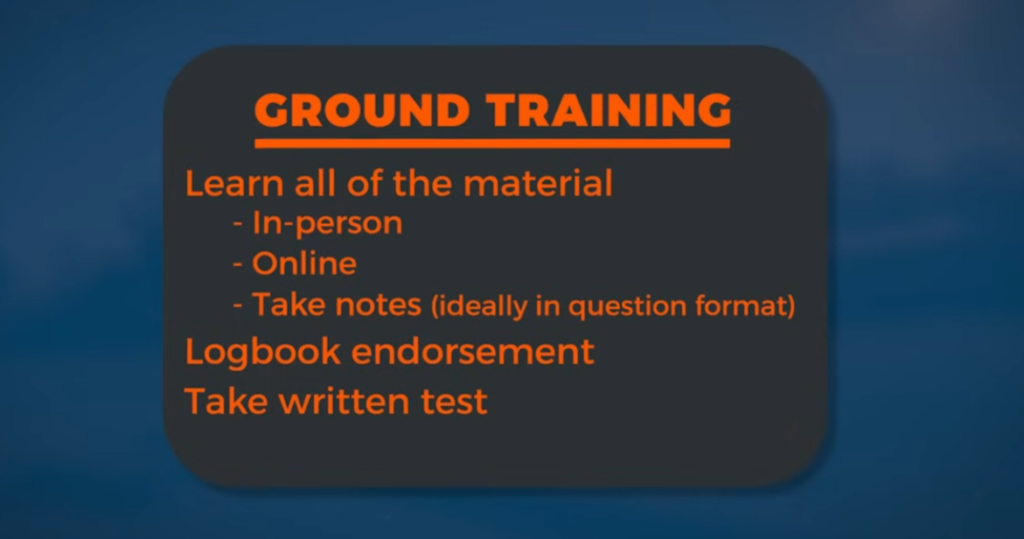
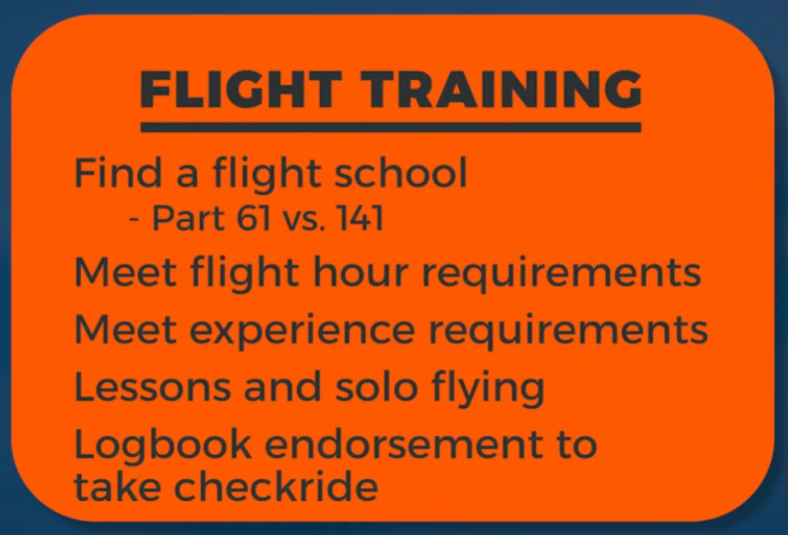
Before you can take your written exam, you will need a logbook endorsement.
This is literally a book where you are going to log every single one of your flights that you ever take, including where you started, where you ended up, how many landings you had, your total flight time, and your instructor’s signature.
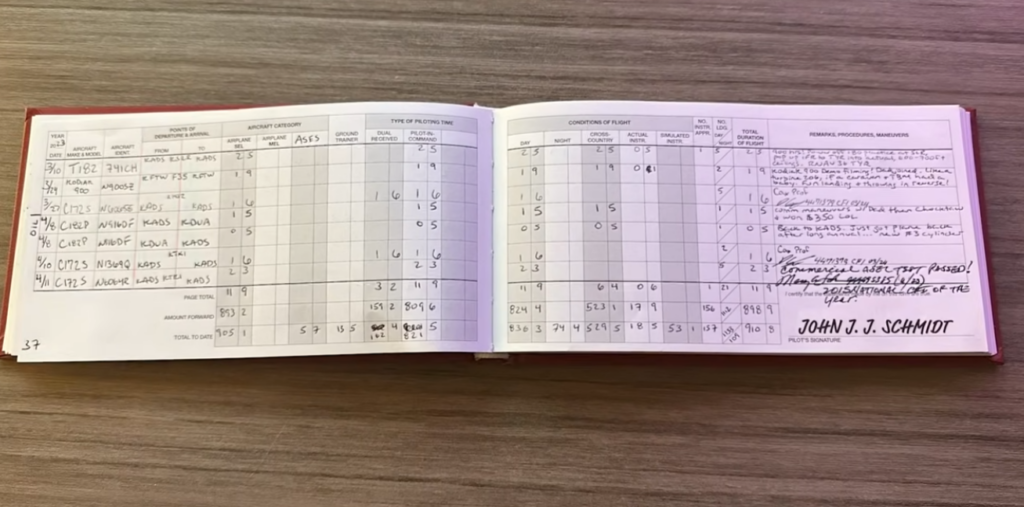
In the very back of this logbook, there’s a whole section for endorsements.
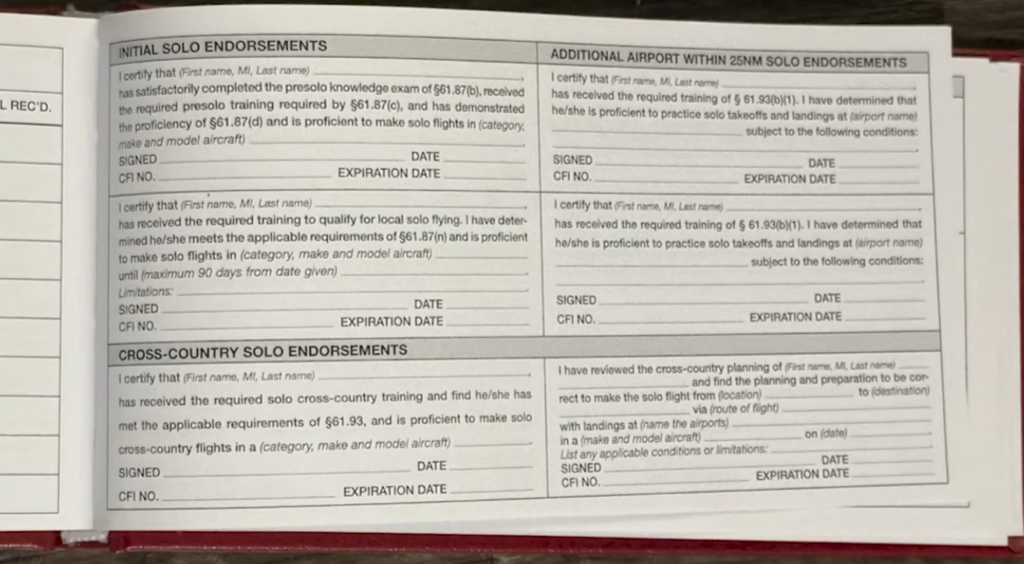
This endorsement for your written exam is basically going to say that you have studied the relevant topics and are prepared for your written exam.
The Best Way to Study
The biggest challenge here really is just the volume of content. So my biggest piece of advice is twofold.
First, you need to take notes. That might sound obvious, but I promise you’re not going to feel like you need to. Whether you’re in person or watching videos, it’s easy to think, “That makes sense,” and just move on.
But the most important part is this: try to write your notes as questions. This does something really powerful. It unlocks active recall.

Instead of passively reviewing your notes, you’re reading them as a question and trying to pull the answer out of your brain, checking if it’s correct, refining it, and reinforcing it. The data suggests that this kind of active recall is far more effective.
This is why flash cards are effective. You’re forcing your brain to work. And that makes memorization way more effective.
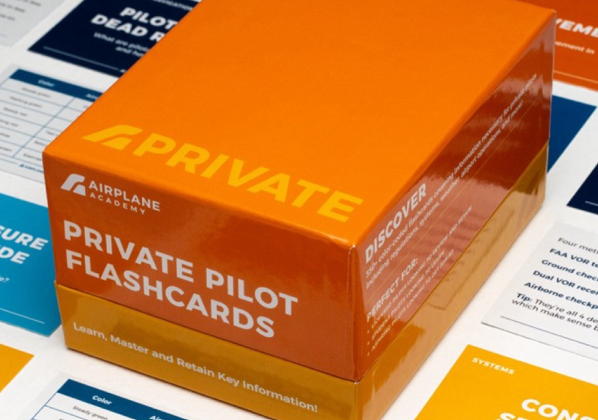
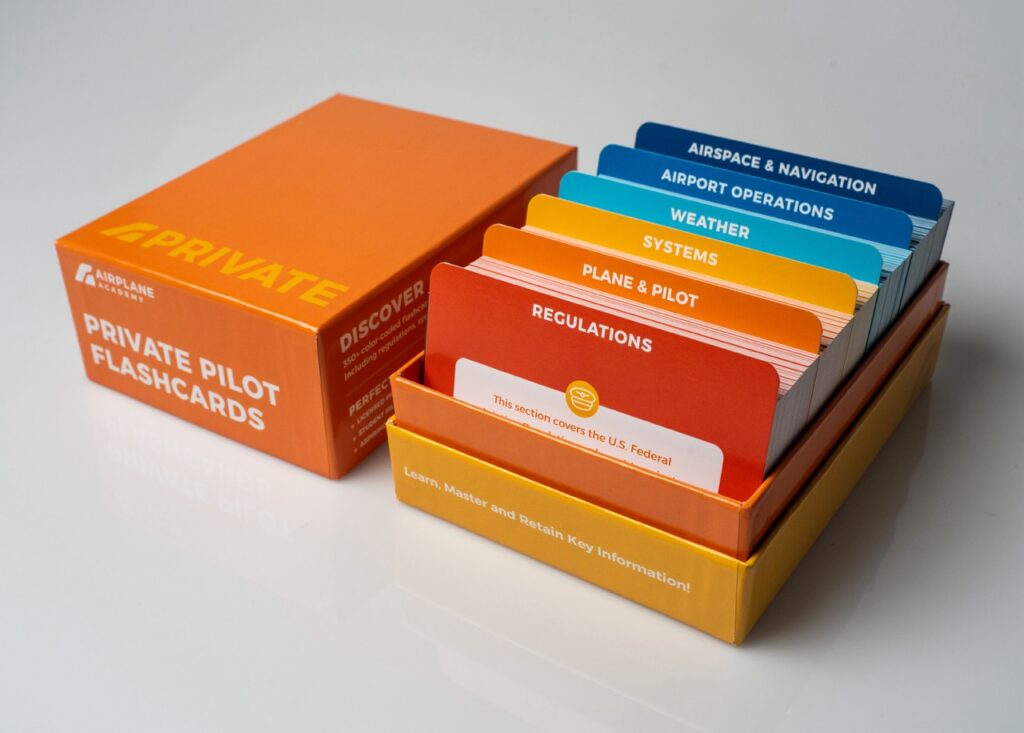
If you want a ready-made way to practice active recall, I recently launched my own study flashcards.
There are over 350 cards, they took me nearly a year and a half to make, they’re reviewed by flight instructors, and they have been used by thousands of pilots.
You can check them out at airplaneacademy.com/flashcards if you want to learn more.
The Written Test
Once you get to the written test, it will be at a specific testing facility. It is taken on a computer and consists of 60 questions, and you have two hours to complete it.
There is no perk for finishing early. Use the entire two hours!
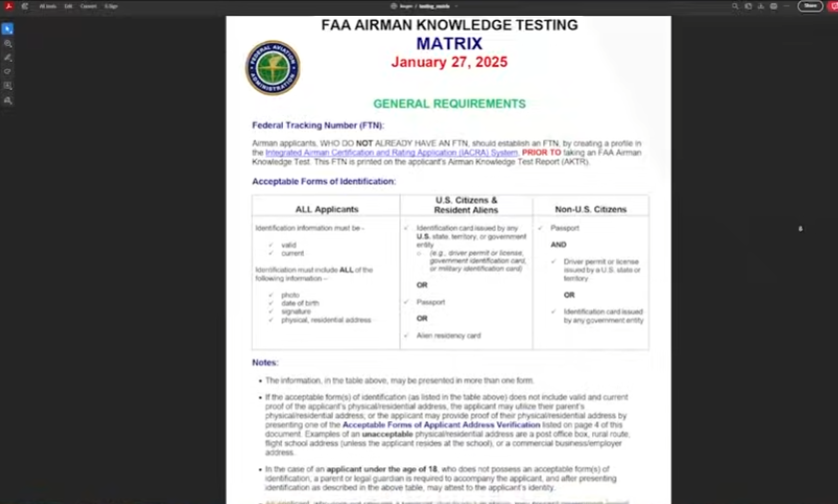
70% is the passing grade. But here’s the thing nobody told me when I took my test at 15: anything you miss on your written test, they will ask you about on your check ride.
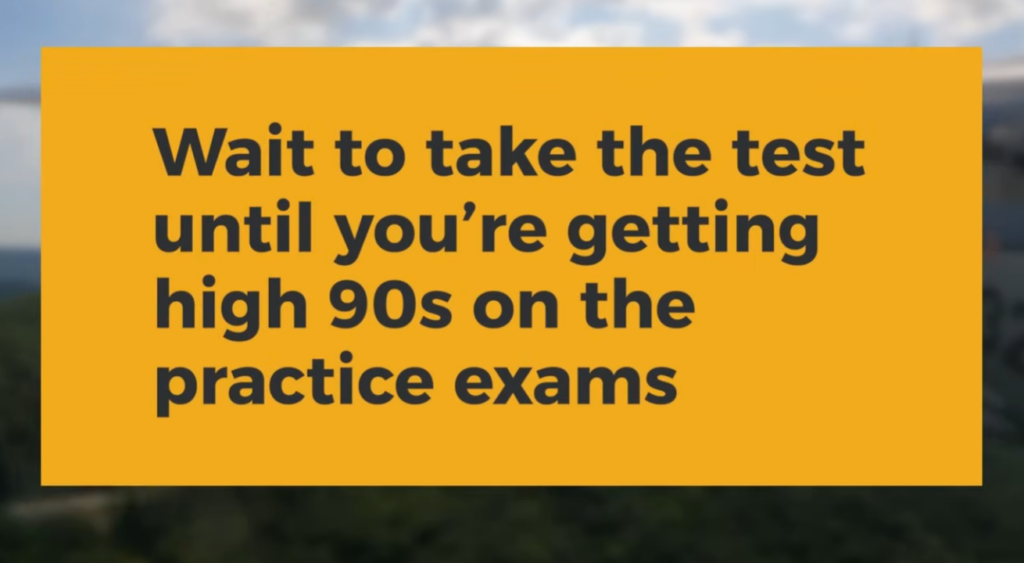
So yes, you want to pass, but it behooves you to get as high of a score as you can.
Your goal shouldn’t be to pass. Your goal should be to get a 100.
In 2024, there were about 46,000 pilots that took the written private pilot test, and it had an average pass rate of about 92% and an average score of about 83%.
So chances are really good that you’re going to pass.
When to take the Written Test
You can take your written test at really any point in your training (once you have your endorsement).
A lot of people end up overlapping their ground school and flight training to some degree. If you wanted to do all of your ground school first, take your written, and then move into flight training, you can absolutely do that.
The main thing to keep in mind is that your written test is only valid for 24 months before it expires.
So, you want to make sure you take it within about two years of your final check ride. That’s a lot of time, which is why most people end up overlapping things a bit.
The FAA’s general suggestion is to wait until you’ve reached the point of your solo cross-country flight before taking the written exam.
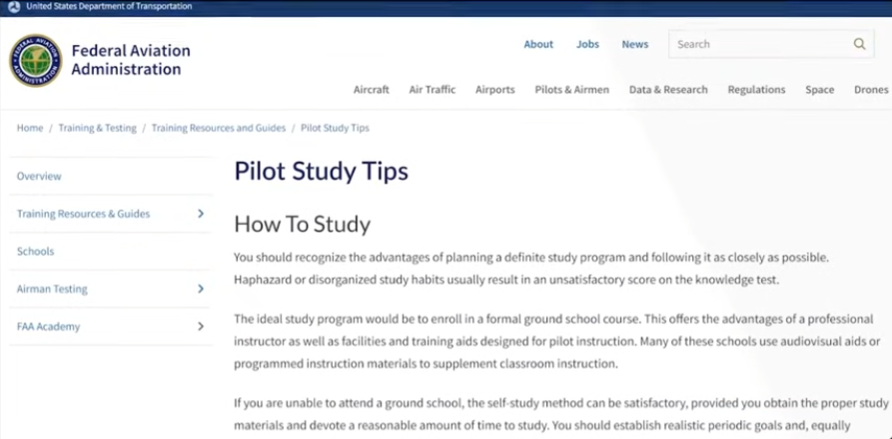
At that stage, you’re navigating and flying by yourself, so you have enough real-world experience to connect the book knowledge to, and you’ll likely score higher as a result.
But again, you can take it at any point. You just need to have your written exam completed before your final check ride.
Free Resource
Like I said, I’ve been licensed for 18 years, and I’ve owned an airplane for 9 of those years. I’ve learned a lot, some through doing things correctly and some through mistakes I’ve made.
I spent a few weeks putting together a free PDF with 88 different takeaways I’ve learned over my years of flying.
It includes all the lessons I’ve learned, the things I’ve messed up, and the things that have gone well, all broken into really skimmable takeaways.
Each one is highlighted so you can quickly go through and pick out things that can hopefully help you in your flying journey.
You can grab it for free at airplaneacademy.com/takeaways.
#2) Flight Training
There are two main types of flight schools: Part 61 and Part 141.
These “parts” come from Title 14 of the Code of Federal Regulations (CFR), which governs aviation in the United States. Within that, there are many different sections that outline the rules and requirements for flying.
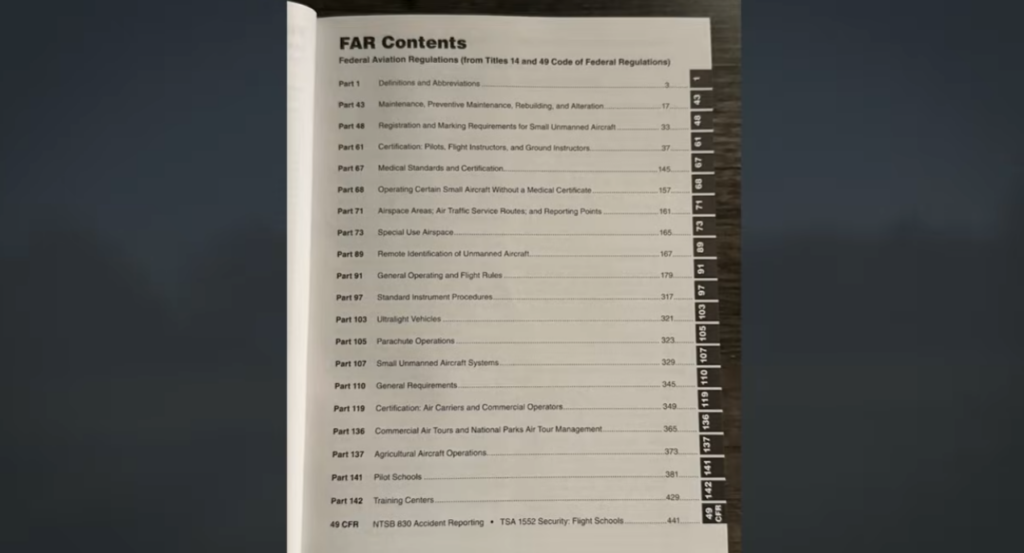
Part 61 covers the requirements for becoming a pilot. Under this structure, an instructor teaches you what you need to know and helps you meet those requirements, but there is more flexibility in how the training is structured.
Part 141, on the other hand, applies to flight schools themselves. These schools have an approved syllabus, structured curriculum, and defined standards they must meet to maintain their certification. Because of that structure and consistency, the minimum required flight hours are slightly lower for Part 141 programs.
The minimum flight time is 40 hours for Part 61 and 35 hours for Part 141, but in reality, most people end up closer to about 75 hours.
For more information on the differences in flight schools, check out this article HERE.
Flight Lessons
Flight lessons are usually broken up into three parts:
- A briefing
- The flight
- A debrief
From day one, you’re in the pilot seat, actually flying the airplane.
Training begins with basic maneuvers like climbs, descents, and turns, and then progresses into slow flight, stalls, takeoffs, landings, and emergency procedures.
First Solo Flight
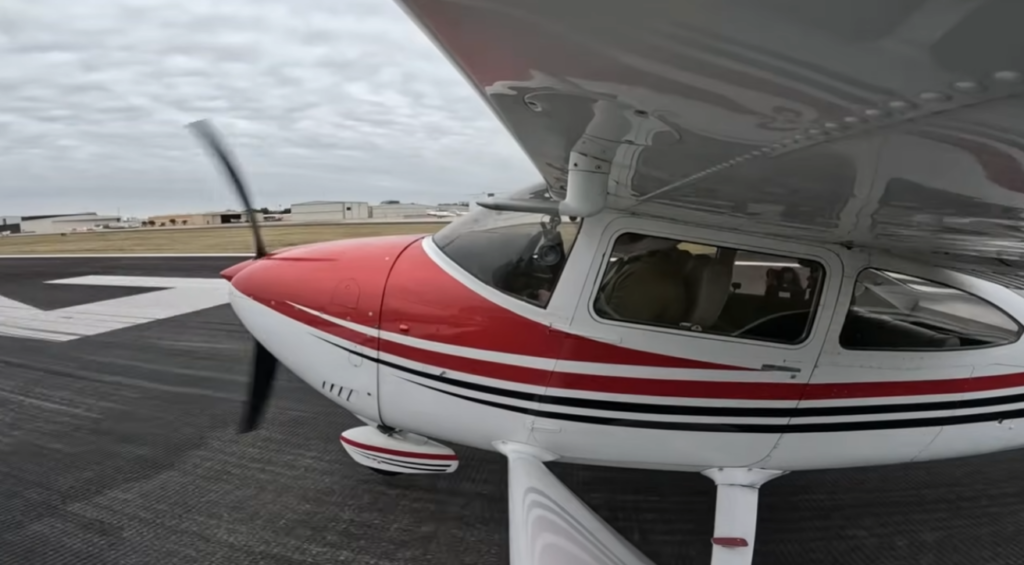
The first big milestone is your first solo flight.
To solo, you must be at least 16 years old and you will need:
- A student pilot certificate
- A logbook endorsement
- A medical certificate
You will have to go through a dedicated AME, Aviation Medical Examiner, for your medical certificate. It’s a separate doctor than your normal doctor.
You can Google AMEs near me or you can contact the Flight Standards District Office (FSDO) near you and ask them for a list of AMEs near you.
As a private pilot, you’ll only need a 3rd class medical.
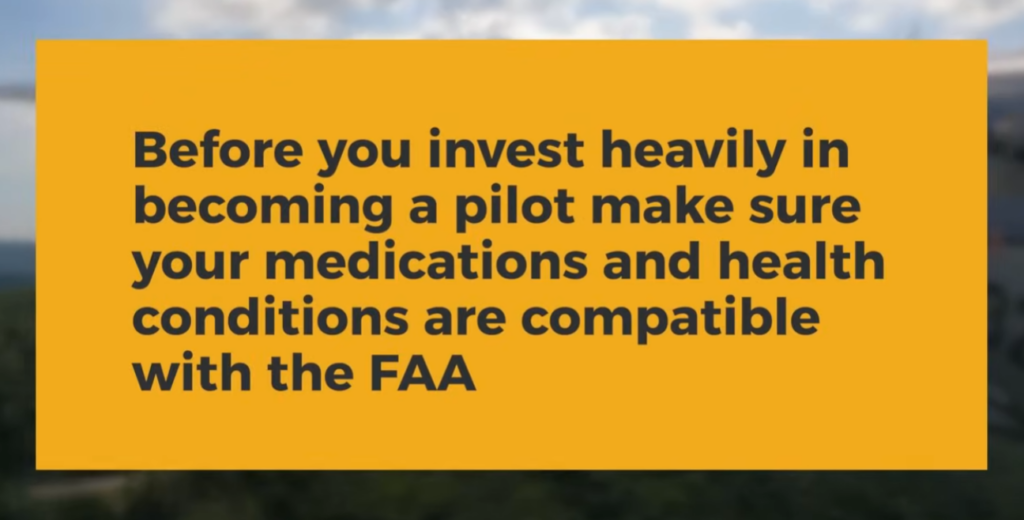
Before you get too far down this road, it’s a good idea to understand how the FAA looks at medical eligibility.
There are certain conditions that will disqualify you outright. There are also others that fall somewhere in between, where you can still get approved, but you may need to go through a process called a special issuance medical.
This means working with an Aviation Medical Examiner (AME) and the FAA to gather documentation about your condition and get it reviewed and approved.
If you have a condition or are taking a medication you’re unsure about, you can start by Googling it along with “FAA” to get a general idea of how it’s viewed.
That said, the internet can sometimes make things sound worse than they are. A better approach is to call an AME and ask for a consultation.
Even a short conversation can help you understand how the FAA is likely to view your situation and what steps you need to take to be prepared.
After Solo
After soloing, training becomes a mix of solo flights and flights with your instructor.
You’ll work on:
- Cross-country navigation
- Solo cross country
- Simulated instrument flying
- Night flight
#3) The Checkride
At the end of your training, you’ll take your final test called the checkride, which consists of two parts:
1) The Oral Exam
The oral exam is usually a couple of hours and is scenario-based with either an examiner from the FAA or a Designated Pilot Examiner (DPE).
The good news is you already know exactly what they’re going to cover through something called the ACS, or Airman Certification Standards.
It’s a detailed document that outlines everything you need to know and demonstrate to pass.
The oral portion isn’t usually rapid-fire questions like “what’s this” and “what’s that.”
In most cases, it’s scenario-based. You’ll often be asked ahead of time to plan a cross-country flight, including things like weight and balance and a full flight plan. Then during the exam, they’ll walk through that scenario with you.
For example, you might be “departing” an airport and the examiner will start asking questions like what airspace you’re in, what the VFR weather minimums are, or how you would handle changing weather conditions.
As you go, they may introduce new situations like needing to divert and ask about fuel requirements or decision-making. It’s very real-world and practical. They might throw in a few curveballs, but overall it’s grounded in realistic scenarios.
2) The Flight Test
Then you’ll move into the flight portion, also outlined in the ACS. You’ll demonstrate:
- Maneuvers
- Stalls
- Takeoffs and landings
- Emergency procedures
Perfection is not the standard, but consistent proficiency is required. If you fail a portion, you can retake just that portion after additional training.
The national pass rate is around 74%, but by the time you’re endorsed, you’re typically well prepared.
After You Get Your License
Once you pass, you’ll receive your private pilot certificate. At that point you’re allowed to carry passengers (not yet for hire… that requires a commercial pilot’s certificate).
One warning is that a lot of people stop flying after they get their license, and then time goes by. Don’t let that happen. Have a plan for what you want to do next so you keep flying.
Time and Cost
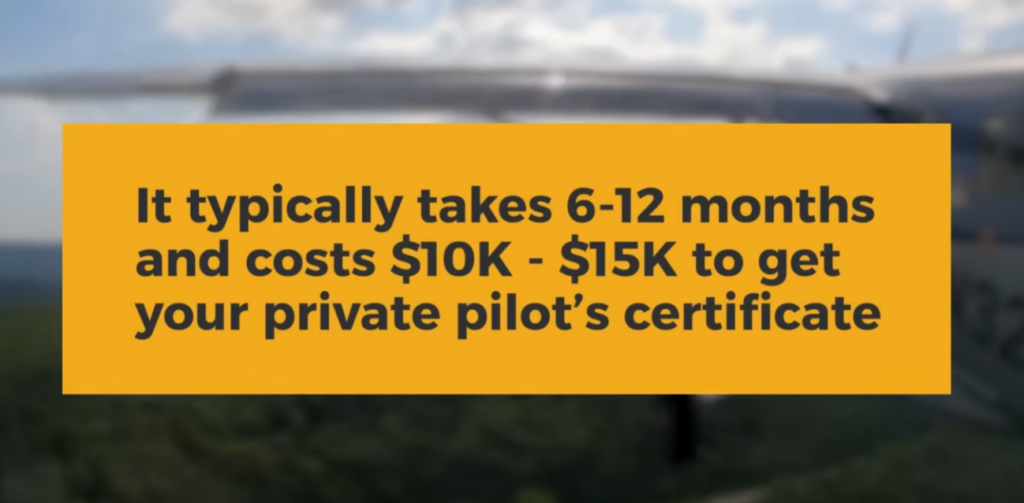
The general estimate is:
- 6 to 12 months
- $10,000 to $15,000
This depends on:
- How often you fly
- Where you’re located
- The type of aircraft you’re flying
Final Thoughts
I know this is a lot to take in, but I promise you it is doable. If you’ve been thinking, “Man, that would be so cool to accomplish,” I just want to be the one to tell you that you can do it.
If you need individual help, you can book time with me and I’ll help you however I can. And don’t forget to grab that free PDF at airplaneacademy.com/takeaways.
As a next step, I also put together a video with my brutally honest advice if you want to become a pilot. You can watch it below. 👇