

This post will help you make fewer mistakes as a pilot.
I know that because I’ve made every single mistake on this list.
The good news? Every one of these mistakes is totally avoidable with just a little intentional effort. None of this requires being a “natural pilot” or having thousands of hours. It just requires awareness, humility, and a few good habits.
Let’s start at number nine and work our way to the biggest mistake I see pilots make.
9. Being Behind the Airplane
Being “behind the airplane” means mentally you’re a few steps behind what’s actually happening in the cockpit. Things feel rushed, reactive, and slightly out of control.
One of the best ways I’ve found to avoid this is mental prep before the flight.
For me, I have a specific intersection on my drive to the airport where I make a deal with myself:
Once I pass this point, I’m thinking about the flight.
I hang up the phone. I stop thinking about work. I turn off whatever ground-life noise is in my head and switch into pilot mode.
On the drive, I’ll loosely visualize the preflight, run-up, and takeoff. Not because I need the reps—but because it prevents me from stepping out of the car still mentally wrapped up in a conference call.
That physical checkpoint has helped me massively avoid being behind the airplane.
8. Using the Checklist… But Not Doing the Checklist
I’m pretty good about pulling out the checklist.
Where I’ve messed up is assuming items are already correct instead of actually verifying them.
Circuit breakers are a perfect example.
If you own the airplane and you’re the only one flying it, it’s easy to assume everything is where you left it. But what if the plane was in the shop? What if a breaker was pulled?
I’ve personally had an autopilot not work simply because a breaker was pulled out—and I skimmed right past it on the checklist.
When you see an item on the checklist, don’t fly through it.
Take half a second to visually confirm it.
It won’t slow you down—and it can save you a ton of confusion later.
7. Poor Go / No-Go Decisions
I learned this the hard way:
It’s better to be on the ground wishing you were in the air
than in the air wishing you were on the ground.
Back in college, I didn’t always have access to an airplane, so when I could fly, I felt pressure to go—even on days that were too windy.
Once airborne, I knew I shouldn’t have gone.
That is a terrible feeling.
If you’re on the fence, just ground the flight. You’ll never regret staying on the ground—but you might regret going.
This applies to weather and to your own condition. The IMSAFE checklist (Illness, Medication, Stress, Alcohol, Fatigue, Emotion) really does matter—especially medication. Some common cold and allergy meds are FAA no-go items, and it’s easy to overlook that.
6. Mistakes With Passengers
There are three big ones here.
1. Scaring passengers to look cool
Don’t do stalls, steep turns, or “surprises” your passengers didn’t ask for.
One of my favorite instructors said it best:
Never scare your passengers—they’ll never fly with you again.
2. Not telling them what to do
The SAFETY briefing is great: seat belts, exits, fire extinguisher, sterile cockpit, etc.
3. Not telling them what to expect
This one gets overlooked.
Explain the takeoff. Explain turbulence. Explain what normal feels like.
If someone hasn’t flown in a small airplane before, I like to ask:
“What would be a successful experience for you today?”
If the answer is “I just want to see my house and land safely,” great.
No stalls today.
5. Memorizing Instead of Becoming Fluent
There is a ton of ground knowledge in aviation, and brute memorization just doesn’t scale.
A better mental model is language learning.
You don’t memorize a language—you become fluent in it over time.
That mindset shift is huge.
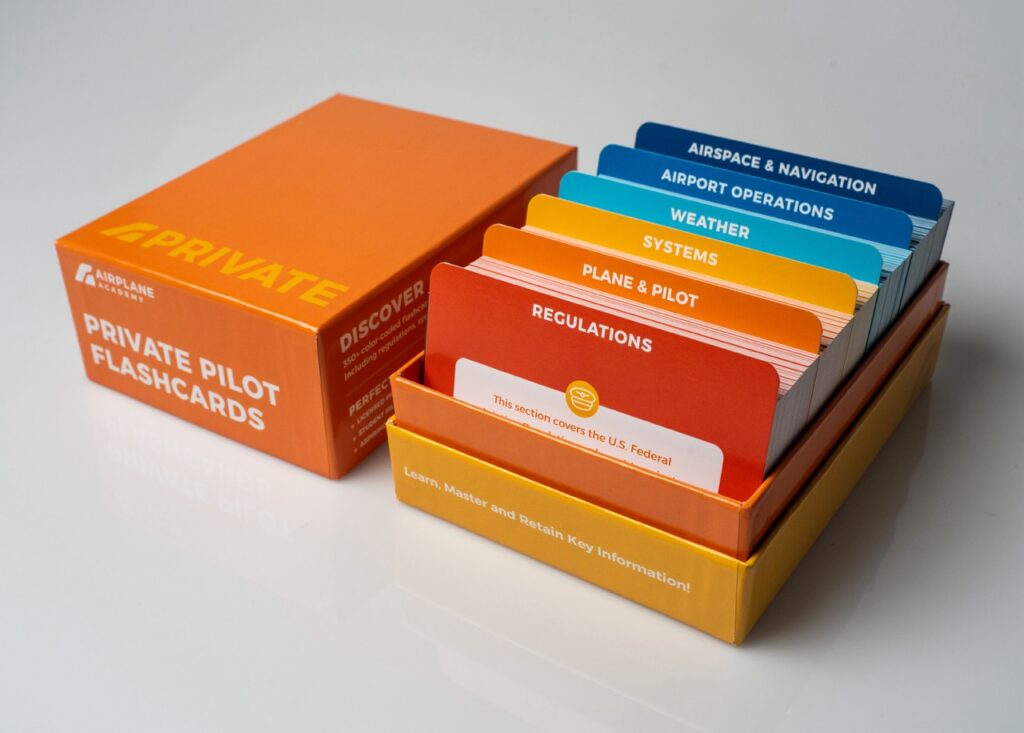
To help with this, I built a very robust set of Private Pilot flashcards—something I personally wanted for myself to keep my knowledge sharp and accessible.
The set includes 350+ cards, has been reviewed by flight instructors and test pilots, and is designed to help you actually retain what you learn—not just cram for a test.
The flashcards are live now and available here:
👉 airplaneacademy.com/flashcards
4. Pride
Pride can show up as aggressive flying—but the sneakier version is being too embarrassed to say:
“I don’t understand.”
I still fight this.
But once you realize that asking questions helps everyone in the room, it becomes freeing. Odds are, someone else has the same question.
That’s also why I share my mistakes publicly. We gain far more from honesty than from pretending to be perfect.
Trying to look perfect just wears you out—and makes you worse in the long run.
3. Landing Too Fast
We’ve all done it: floating halfway down the runway because we carried 20 extra knots.
Long runways spoil us.
At my home airport (7,000 feet), there’s little penalty for coming in too fast. But if you ever want to land on shorter strips, landing fast will absolutely bite you.
Get comfortable flying slow.
A good technique: even on long runways, pretend you don’t have one. Aim for the first or second taxiway turnoff. Don’t skid tires—but don’t act like you’ve got unlimited pavement either.
2. Messing up Air Traffic Control Communications
ATC can feel intimidating, but here’s the truth:
98% of radio work is the same patterns over and over.
It’s just another language.
Listening to LiveATC helps. But the fastest hack?
Announce yourself as a student pilot.
Controllers will slow down and help you more.
If you’re confused on the radio—say so.
Asking for help is always better than pretending you understand.
Safety beats pride every time.
1. Stopping Learning After the License
This is the biggest mistake I see.
In general aviation, staying proficient is optional—other than a flight review every 24 months, no one forces you to keep growing.
So you have to choose it.
My suggestion: always have a “next thing.”
- Instrument rating
- Commercial or multi
- Seaplane
- Tailwheel
- Mountain flying
- Backcountry or STOL training
It doesn’t matter what—just don’t stop.
You can also keep sharpening your ground knowledge, which directly translates to better decision-making in the cockpit. That’s exactly why I created the flashcards—to make ongoing learning simple, effective, and easy to stick with.
If you want to check them out, they’re available at:
👉 airplaneacademy.com/flashcards